
About 50 min · 4–6 servings
Roasted Butternut Squash Soup
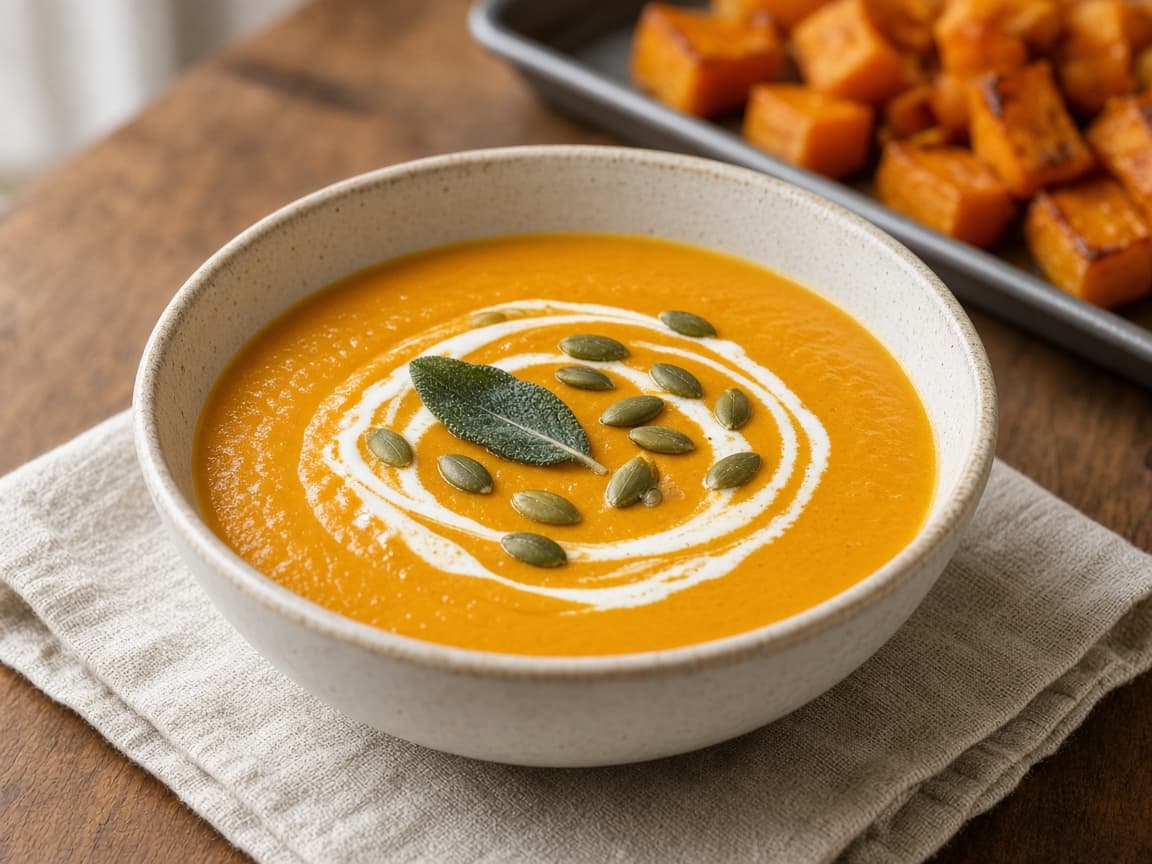
SaveCubed butternut roasted until sweet, simmered with onion and vegetable broth, then blended smooth and finished with a little cream.
Allergen tags are cooking labels. They are not medical advice.
Ingredients
- 2 lb / 900 g Butternut squash, peeled, seeded, and cut into 1-inch cubes
- 3 Tbsp Olive oil, divided
- ¾ tsp, plus more at the end Kosher salt, divided
- ½ tsp Black pepper
- 1 medium (about 150 g) Yellow onion, diced
- 3 Garlic cloves, minced
- 4 cups / 960 ml Low-sodium vegetable broth
- ⅓ cup / 80 ml Heavy cream
- A pinch, optional Ground nutmeg
- 4, optional Fresh sage leaves
Method
- Heat the oven to 425°F / 220°C. Line a rimmed sheet pan with parchment, or oil the pan lightly.
- Toss the squash with 2 Tbsp of the olive oil, ½ tsp of the salt, and the pepper. Spread the cubes in one layer. Roast until the edges are browned and a cube is tender, about 25–30 minutes. Stir once halfway so the undersides color.
- Warm the remaining 1 Tbsp olive oil in a heavy pot over medium heat. Add the onion and the rest of the salt. Cook, stirring now and then, until the onion is soft and sweet, about 6–8 minutes. Do not let it brown hard. If the bottom starts to color, lower the heat. Stir in the garlic and cook 30 seconds.
- Add the roasted squash and the broth. Add the nutmeg and the sage leaves if you are using them. Bring the pot to a simmer and cook 10 minutes, until the squash and onion taste like one pot.
- Take out the sage leaves. Blend until smooth with an immersion blender. If you use a standing blender, fill it only halfway, hold the lid with a towel, and vent the lid so steam can escape. Blend in batches.
- Stir in the cream. Warm the soup on low until it is hot. Do not let it boil hard after the cream goes in, or the cream can separate. Taste, and add a pinch more salt only if the soup tastes flat. Ladle it into bowls. A thin extra drizzle of the same cream is optional. The soup keeps covered in the fridge for a few days. Reheat it gently, and loosen it with a splash of broth if it thickens.
Nutrition
Kitchen estimate only, not lab-verified. Counted as 1 of 6 bowls from this pot. Optional nutmeg, sage, and any extra cream at the table are not in the count. The broth you buy, and any extra salt at the end, move the sodium.
Nutrition per serving (estimated)
- Calories
- 190
- Protein
- 3 g
- Total carbs
- 22 g
- Fiber
- 4 g
- Total sugars
- 6 g
- Added sugars
- 0 g
- Total fat
- 12 g
- Saturated fat
- 4 g
- Sodium
- 680 mg
Estimated from USDA data for the ingredients as written. Values vary by brand and portion. Not medical or dietary advice.
Guest diet / allergy swaps
Short kitchen notes for guests. A fuller gluten-free or dairy-free ingredient list, when we have one, is in the panels below.
Dairy-free
The soup as written finishes with heavy cream, so the dairy is that cream. Leave the cream out and stir in ⅓ cup / 80 ml unsweetened canned coconut milk instead. Warm it the same way and do not boil it hard. Coconut is sometimes grouped with tree nuts. Read the can. Olive oil is already the fat on the squash and the onion, so do not add butter.
Vegan
As written this is vegetarian, not vegan, because of the cream. Use the dairy-free swap: unsweetened canned coconut milk in place of the cream, and keep the broth vegetable. There is no meat, egg, or honey in the pot.
Gluten-free style
Squash, olive oil, onion, garlic, and cream do not call for wheat. Some vegetable broths use wheat or barley. Read the carton and use one that does not list them. This is a kitchen note, not a gluten-free certification.
No sage or nutmeg
Leave both out. The soup is squash, onion, broth, and cream.
Shopping list
Paid feature — coming soon when checkout is live.
Signed-in members with a paid flag can keep shopping lists and region notes. Checkout is not live, and this page will not charge a card.
See shopping listsOriginal Daily Spatula kitchen recipe.
Not medical advice. Allergen labels and swaps are for cooking convenience only — never a claim that a dish is “safe” for any condition, allergy severity, or dietary medical need. When in doubt, verify ingredients and ask a clinician or dietitian.